“The virtues of donations are great, because it helps the needy and at the same time it gives an opportunity to the donor to give the surplus to the people in need ” - Sama Veda

Search This Blog

Showing posts with label Forgotten food. Show all posts

Wednesday, July 29, 2020

PARANGIKKAI PAAL KOOTU / YELLOW PUMPKIN PAAL KOOTU

Parangikkai paal kootu recipe, paal kootu recipe, Yellow pumpkin paal kootu recipe

Paal kootu is a heirloom recipe, a kootu variety with mild sweetness (stew) made with milk and specific vegetables like yellow pumpkin and snakegourd. This tastes great as a side dish with vatha kuzhambu or can be mixed with cooked rice. There are variations of making this dish, this is my grandma's way of making paal kootu.

INGREDIENTS:
  • Diced yellow pumpkin - 2 cups
  • Milk - 1/2 cup
  • Rice flour - 1 tsp.
  • Salt - 1/8 tsp.
  • Sugar - 1 tablespoon ( add more if you like it too sweet)
  • Hing - 1/8 tsp.
  • Turmeric powder - 1/4 tsp.
  • Sambar powder - 1/2 tsp.
  • Green chilli - 1 slit (optional)
  • Grated coconut - 1 tablespoon
  • Water - as needed
To temper:
  • Coconut oil or ghee - 2 tsp.
  • Mustard seeds- 1/4 tsp.
  • Split urad dhal - 1 tsp.
  • Curry leaves - few

METHOD:
  • Peel and chop parangikkai (yellow pumpkin) into chunks. Add very little water to it and add turmeric powder, sambar powder, salt, hing and slit green chillies.
  • Cook until soft but not mushy.
  • Dissolve rice flour in milk and add to it. Add sugar and grated coconut. Sugar can be added as required.
  • Mix gently and add water to get the desired consistency. Temper with the given ingredients.
  • Traditional and unique Parangikkai paal kootu is ready.

Wednesday, May 27, 2020

HORSEGRAM ADAI RECIPE / KOLLU ADAI RECIPE

Horsegram adai recipe, Kollu adai recipe
Horsegram is considered a super food. It has the highest calcium content among pulses and has high source of protein. It is ideal for obesity people and diabetic friendly.

INGREDIENTS:
  • Horse gram (Kollu) - 1/2 cup
  • Idli rice - 1/4 cup
  • Bengal Gram (Kadalai paruppu) - 1/2 cup
  • Tur Dal - 1/4 cup    
  • Ginger - 1" piece
  • Hing - 1/8 tsp.   
  • Red Chillies - 4 or 5  
  • Curry leaves - 2 sprigs
  • Salt - to taste
  • Oil - to drizzle

METHOD:
  • Soak dhals, chillies and rice together in water for 4 hours. Drain the water. Reserve very little of soaked water to grind. Grind in a blender to a coarse, thick paste with ginger, curry leaves and salt. Add very little soaked water if necessary.
  • Heat a tawa. Keep the batter thick and spread adai with hands on tawa directly or make it thin and spread the batter with a ladle. Drizzle oil on sides. Cover and cook for a couple of minutes. When done flip to the other side. No need to cover now. Cook until crisp golden on both sides. Serve hot with butter, jaggery , dosai milagai podi or avial. 

Friday, April 17, 2020

FOXTAIL MILLET TOMATO NEER DOSA

foxtail millet tomato neer dosa, tomato neer dosa, Millet mania

INGREDIENTS:
  • Foxtail millet (Thinai) or Any millet - 2 cups
  • Grated Coconut - 1/2 cup 
  • Tomato - 2 medium sized
  • Salt - to taste
  • Oil

METHOD:
foxtail millet tomato neer dosa, tomato neer dosa, Millet mania

  • Soak foxtail millet (Thinai) (OR any millet) for 3 hours and grind it along with scraped coconut, tomato and salt to a fine paste. (Do not allow the batter to ferment).
  • Add water to make a medium-thin batter (the batter should not be very watery or very thick).
  • Heat a dosa tawa, pour the batter from the sides (as of rava-dosa).
  • Drizzle very little oil to the sides. When done, turn it to the other side. Serve hot.
  • Goes well with dosai molaga podi,or any chutney of your choice.

Monday, November 13, 2017

MOR KALI RECIPE/ MOR KOOZH RECIPE

How to make Mor kali, How to make Moar koozh,How to make Mor koozh
Mor kali / Mor koozh is a traditional recipe of Tamil Nadu. It is often made in Tamil Brahmin families. It is made with rice flour and buttermilk. This recipe can be made in a jiffy, easily digestible and can be made for breakfast, evening tiffin or dinner.

INGREDIENTS:

Rice flour OR Processed rice flour OR Store bought rice flour - 1 cup
Whisked sour curd - 3/4 cup
Salt - to taste (approx. 1 tsp. or as needed)
Water - 1 or 2 cups

To temper:
Gingelly oil - 1 tablespoon
Mustard seeds - 1/2 tsp.
Urad dhal - 1 tsp. (optional)
Green chilli (chopped) -1 OR Dry red chilli- 1 (cut )
Hing - 1/4 tsp.
Mor milagai (curd chillies) - 4 (slightly crushed)

Curry leaves - 2 sprigs (finely chopped)
How to make Mor kali, How to make Moar koozh,How to make Mor koozh
METHOD:

Whisk curd until smooth. In a mixing bowl, add rice flour, whisked curd, salt and water. Mix without any lumps. Mix to a little thinner than dosa batter consistency. Heat oil in a kadai. Temper with given ingredients. When mor milagai turns black, simmer the stove and add the rice flour mixture. Stir continuously until it thickens. 
(Alternatively you can add the temperings to the rice flour mixture, mix well and stir in a kadai). The consistency of the mixture should be like halwa and glossy.  Add a spoon of gingelly oil, mix well. 

Transfer it to a plate and even the surface with the backside of a greased cup. When slightly cool, cut into desired shape. You can also have it like koozh.
How to make Mor kali, How to make Moar koozh,How to make Mor koozh
Note: Coconut oil can also be used.

Friday, March 24, 2017

NARTHA ILAI PODI / VEPPILAI KATTI / CITRON LEAVES PICKLE / CITRON LEAVES POWDER

How to make Nartha ilai podi, How to make veppilai katti, How to make citron leaves pickle, How to make citron leaves powder

Citron leaves are known for its medicinal values and effective for treating nausea, vomiting, and heartburns. Veppilai katti is a traditional tambrahm pickle. This is a powder based pickle, yes, you read it right, pickle in powder form, made by pounding the tangy flavoured citron leaves and some spices. Actually this has NO NEEM LEAVES, but is named so.This pickle will be in powder form and can be shaped to small balls as well. Both Narthai ilai podi and veppilaikatti are same. If in powdered form we say it as Narthai elai podi and if shaped to balls we say it as veppilai katti. It has a longer shelf life.

Some stores also sell veppilaikatti, but they add tamarind and more chillies giving it a brownish red colour. Personally, I dislike the tamarind taste in this pickle. So, I make this at home as I prefer the aroma of the leaves to dominate and the greenish colour. Nartha ilai podi / Veppilaikatti is tangy flavoured, spicy pickle and makes an excellent accompaniment to curd rice.


INGREDIENTS:

Tender narthai leaves (Citron leaves) and lemon leaves - 1 1/2 cups (tightly packed)
Dry Red Chillies - 6
Omam(Ajwain) - 1 tsp.(heaped)
Crystal salt - to taste
Asafoetida - 1/2 tsp.
Lemon juice from one key lime or as needed

How to do Nartha ilai podi, How to do veppilai katti

How to do Nartha ilai podi, How to do veppilai katti
METHOD:

Pluck tender citron leaves and lemon leaves, wash well, pat it dry, remove the veins as shown in picture. Keep ready.

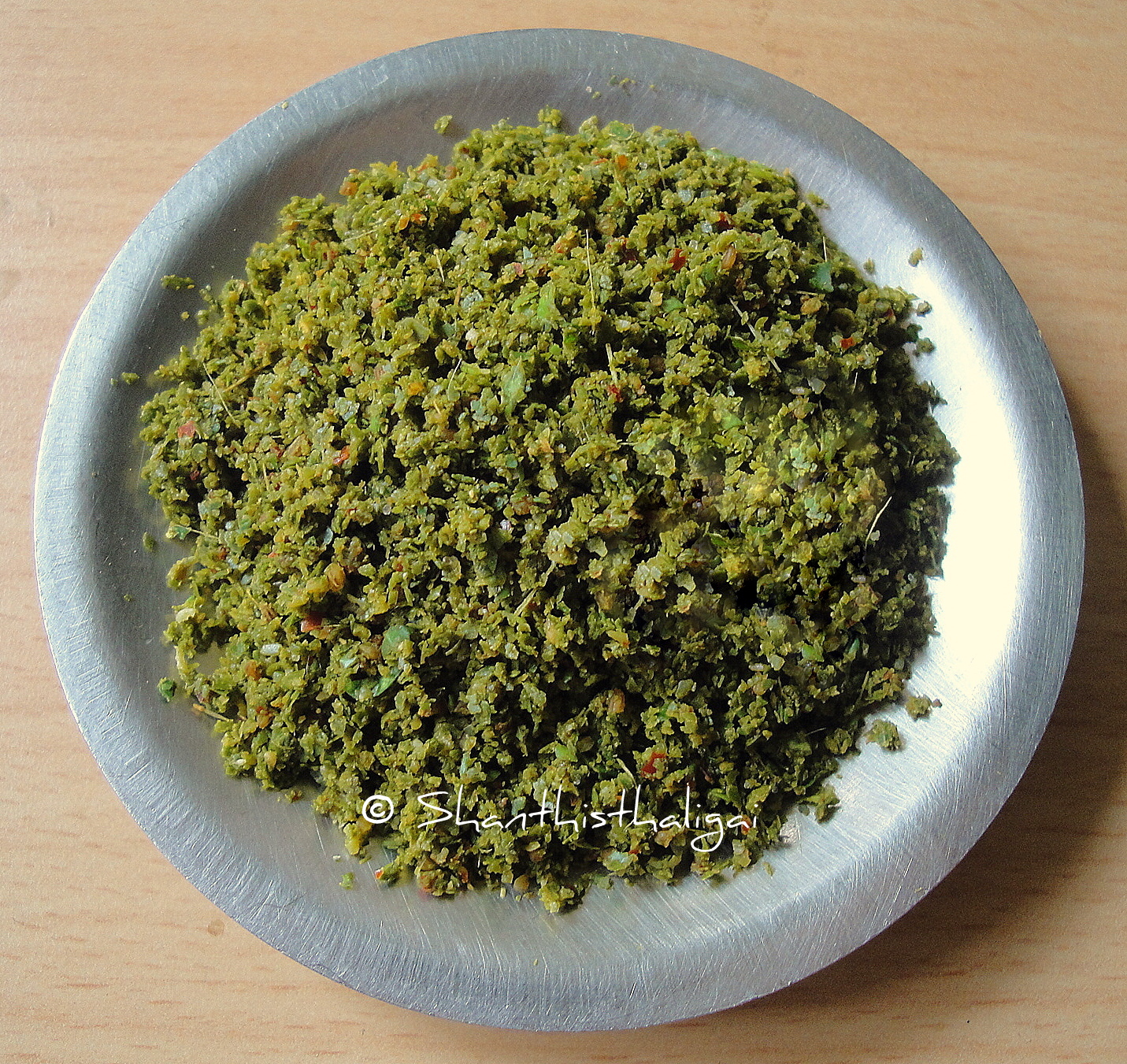
Heat a kadai and dry roast chillies for a minute. Dry grind hing, chillies and ajwain to a coarse powder in a mixie. Keep aside. Pulse the leaves, alongwith required salt coarsely. Combine all ingredients and pulse it to a coarse powder until everything is mixed well. Transfer to a bowl, add lime juice and make small balls. After drying, the colour changes, don't worry it is edible. Narthai ilai podi / Veppilaikatti is ready.

NOTE:
Lemon leaves can be substituted for citron leaves.
Adjust chillies and lime juice to suit your tastebuds.

VARIATION:
Done only with narthai leaves.
Curry leaves can be added.
Tamarind and more chillies are added which gives a brownish red colour to the balls.
Some add green chillies. Some add pepper and cumin.

Monday, February 27, 2017

ERICHA KUZHAMBU / YERICHA KUZHAMBU

How to make erichcha kuzhambu, How to make yericha kuzhambu

Ericha kozhambu is a left-over special kuzhambu. This is made with leftovers after any functions, shraddham, festivals or any special occasions. My grandma makes this in a kalchatti.  She says, if generous oil is used and properly heated, it can be preserved for a couple of days (in those days there was no fridge at home). As everything is re-heated, it gets the name 'erichcha' kuzhambu. The leftovers transform to a kuzhambu with unique taste thus preventing wastage. As the shraaddha leftovers are not given to anyone, this procedure is followed.

Generally, in any household, nothing is checked for the taste before offering to GOD. In Iyengar household, offering to bhagavan is said as 'kandarulap pannudhal'(கண்டருளப் பண்ணுதல்), which means everything cooked for the day is presented before bhagavan, so that he can mercifully glance them with his divine vision to purify the same. So, nothing is tasted while cooking.

But as the ingredients in this kuzhambu are already offered and tasted, you are at liberty to check for the taste and add salt, chilli powder or sambar powder if needed.

This kuzhambu has a unique taste. It can be mixed with hot cooked rice and ghee and goes well with adai, dosai, idlies too. Tastes excellent with curd rice. It is almost a forgotten grandma's recipe.

Some people say ezhu kari koottu/ thalagam which is made on Tiruvadhirai as erichcha kuzhambu. But this is different from that, with very little ingredients, heated and heated in oil until it becomes thick . Click here for ezhu kari koottu.

NOTE: DON'TS

* DO NOT ADD* leftover raitha/thayir pachadi, sweet pachadi, payasam, pradhaman or anything which has jaggery or sugar, milk, buttermilk or curd in it.


INGREDIENTS:

Leftover kariamudhu(roast,curry/poriyal), kootu, sambar/kuzhambu, thogayal and rasam
Oil - one /two ladles or more depending on the leftovers

How to make erichcha kuzhambu, How to make yericha kuzhambu
METHOD:

Heat a generous quantity of oil in a kadai, add all the items mentioned in the ingredients, mix everything and allow it to boil in medium flame until thick.

NO TEMPERING NEEDED. GENEROUS QUANTITY OF OIL IS A MUST.

Wednesday, September 21, 2016

ULUNDHORAI / IYENGAR STYLE ULUNDHORAI / IYENGAR TEMPLE STYLE ULUNDORAI / ULUNDOGARE /ULUNDU SADAM

Ulundorai recipe,How to make Iyengar style ulundorai, How to make ulundogare

Ulundorai / Iyengar ulundhorai is made on festivals and special occasions. Another traditional/authentic iyengar recipe which I never came across while browsing. But people who often visit Perumal temples must be knowing this as a prasadam. Ulundhorai is served as prasadam in Perumal kovil (temples) and is very famous in Melkote temple. It is pronounced as ulundogare in Karnataka. There are endless varieties of rice recipes in Iyengar cuisine. Click on the names for some other Iyengar style rice recipes. Iyengar puliyodharaiMilagorai, Melkote Puliyogare, Tirukoshtiyur tirumaalai chamba, Ellorai, Lentils khichdi, Iyengar special kadambam, Kalkandu bhath (iyengar style), Chitrannam, Akkaravadisal, Vennpongal.

INGREDIENTS:

Cooked rice - 4 cups
Split urad dhal - 3 tablespoons
Milk (boiled) - 1 1/2 - 2 cups
Grated kopra (dry coconut) / grated fresh coconut - 2 tablespoons
Salt - to taste
Hing - 1/4 tsp.
Ghee - 3 tablespoons
Cashews - few
Dry red chillies - 4
Curry leaves - few

METHOD:

NOTE: Dry red chillies are not added in authentic ulundorai. In some temples, chillies are added, but in Melkote temple, chillies are not added. Do not ask me 'how will it taste without spices?'. The prasadams in Uppiliappan temple tastes superb without salt. Can anyone imagine / taste a puliyodarai or vadai without salt at home? Its the divinity in the prasadams which makes it special.  Ulundhorai smells and tastes divine with ghee, urad dhal, milk and cashews. Be generous in ghee and cashews. I have added red chillies just to make the dish colourful and a little spicy. Now, to the authentic iyengar ulundorai...

Cook rice in such a way that the grains are separate and not sticky. Spread the cooked rice in a plate and allow it to cool.

Heat a tablespoon on ghee in a pan, add urad dhal and  fry until golden brown. Now add curry leaves, hing and grated dry coconut. Saute for a while. If using fresh coconut, saute until the coconut is crisp. Transfer to a plate and when cool, grind it in a mixie to a coarse powder.
Ulundorai recipe,How to make Iyengar style ulundorai, How to make ulundogare
In the same pan, pour milk, add the ground powder and keep stirring. The urad dhal mixture should be well cooked in milk. When it becomes like a paste and starts leaving the sides, add salt. Mix well. Remove from fire. Add this paste to the cooked rice according to requirement. Heat 2 tablespoons of ghee, fry cashews until golden brown alongwith dry chillies and curry leaves and add it to the rice. Mix gently without breaking the grains. Alternatively, the cooked rice can also be added to the paste in the pan, alongwith temperings and mixed gently. Garnish with thulasi. Authentic Iyengar temple style Ulundhorai / Ulundorai is ready for offering to Perumal on Purattasi Saturday. No accompaniment is necessary, but can be served with fried vadam or appalam.

Saturday, June 4, 2016

MAAVADU THOGAYAL / VADUMANGAI THOGAYAL

MAAVADU THOGAYAL, VADUMANGAI THOGAYAL , FORGOTTEN FOOD, VADU MANGAI RECIPE, MAAVADU RECIPE

My grandma makes this traditional thogayal. Now, you can say this as a forgotten food as I never came across this recipe anywhere while browsing and thought of sharing this traditional recipe with all. My grandma used to make this thogayal with the old, soggy, one year old vadumangai/maavadu, just after/before the fresh batch of seasonal maavadus are ready. This is called 'azhugina mavadu thogayal', NOT literally made with the rotten ones, but with the soggy ones which has lost its crunchiness in a year, without wasting it. Mine was crunchy even after a year and I did not have any soggy ones!!! However, you can also make with regular maavadu. My grandma also makes a pachadi / raita with this, like nellikkai pachadi, which is quite common.

INGREDIENTS:

Maavadu - 15 (one year old)
Urad dhal - 2 tablespoons
Chenna dhal - 2 tablespoons

Toor dhal - 1 teaspoon
Dry red chillies - 3 or 4

Salt - to taste
Hing - a generous pinch
Curry leaves - few
Oil - 1 teaspoon


METHOD:

Heat oil in a pan and fry the given ingredients (except maavadu) until golden brown. When cool, dry grind coarsely, add maavadus, very little salt (as maavadu has salt and chillies in it) and grind again to a coarse paste. This thogayal should be coarse as shown in picture and should NOT be a fine paste. Sprinkle very little water if necessary. A perfect combo for curd rice. You can also mix with hot rice and ghee, but tastes great with curd rice. 


NOTE: The seeds of baby mangoes have medicinal benefits. So it is not necessary to remove the seeds. However, you can remove the seeds if it is not so tender.

Wednesday, September 16, 2015

VAZHUKKU KOZHUKATTAI / KALLU KOZHUKATTAI / KAL KOZHUKATTAI

Forgotten food, forgotten indian  food, How to make kallu kozhukattai, How to make vazhukku kozhukattai

My grandma makes this traditional recipe. You can say this as a forgotten food, as I never came across this recipe anywhere while browsing and thought of sharing this traditional recipe with all. It is a big hit in our home. This is a spicy kozhukattai. As the name suggests, this tasty vazhukku kozhukattai will be sticky and semi gravy. 'Kal' in Tamil is stone and coloquially called 'kallu'. So, this is named as 'kallu kozhukattai' as it is stone sized and stone shaped. It is also called 'vazhukku kozhukattai' as it is sticky, slips in the mouth and easy to swallow. It is different from neer kozhukattai and kanji kozhukattai. I had asked my amma for this recipe long back and also took notes of it, but I did not make it till now. Recently my mother gave me the recipe and said, 'Un blogla idhai podu, munnellam pillaiyar chaturthikkum pannuvaa' meaning 'you post this is your blog, earlier this was done during ganesh chaturthi also'. 

INGREDIENTS: 

Idli rice - 2 cups
Toor dhal - 1/2 cup
Dry red chillies - 5 or 6
Grated coconut - 2 tablespoons
Asafoetida - sundakkai (turkey berry) size
Curry leaves - 3 sprigs
Salt - to taste
Water - 5 cups + little more

To temper:
Coconut oil - 2 tsp.
Mustard seeds - 1/4 tsp. 
Split urad dhal - 1 tsp.
Dry red chilli - 1
Curry leaves - few

METHOD:

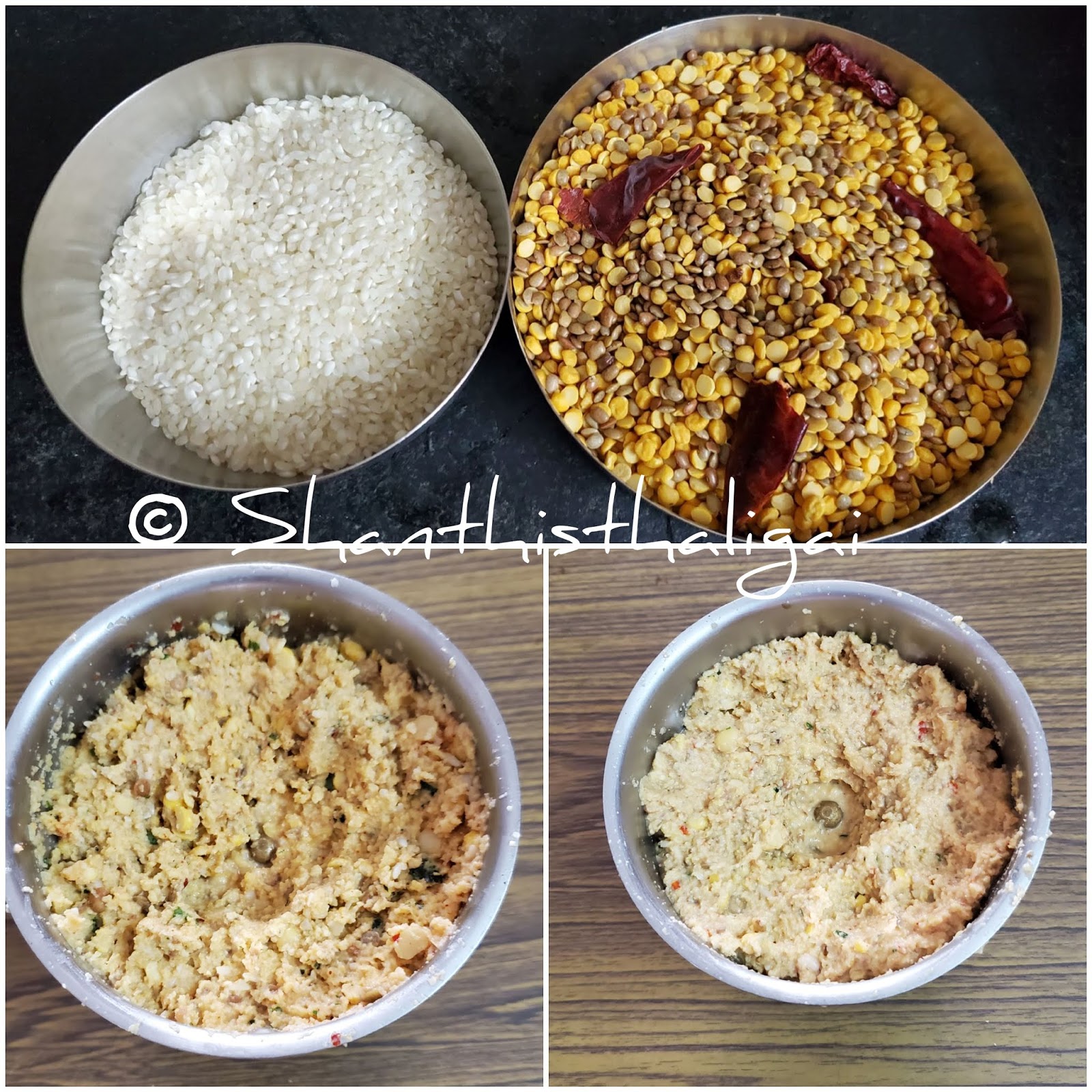
Soak rice, dhal and chillies for 3 hours. Add very little water and grind to a very fine, smooth, thick paste alongwith salt and other ingredients. The batter should be as thick as possible. Anyway, little water should be added to grind fine, so wrap the batter in a clean towel to absorb excess water. The batter will now be like a dough. It should be easy to shape balls and should not stick in your hands. Pinch small balls out of the dough and keep ready. The balls need not be very perfect, shape roughly like balls. The consistency should be like the below picture.


Forgotten food, forgotten indian  food, How to make kallu kozhukattai, How to make vazhukku kozhukattaiForgotten food, forgotten indian  food, How to make kallu kozhukattai, How to make vazhukku kozhukattai
Collage pictures taken by my sister

Meanwhile, in a deep vessel or cooker, pour water and allow it to boil. Put about 10-15 balls in the boiling water for a batch. Do not put it in the same place, put it scattered in water. Initially, it goes to the bottom and when cooked it floats on top. Stir in between. Now put the next batch of 10 balls. Do not take out the previous batch of balls. Repeat the procedure until all balls are done. Keep some more hot water also ready. If necessary, you can add it. The whole mixture will become glossy and the kozhukattais when pressed will be slightly hard. This is the consistency. The kozhukattais should not be too dry or too watery. The correct consistency should be like this. Temper with the given ingredients.
Serve hot or warm. Vazhukku kozhakattai / Kallu kozhakattai is ready.

NOTE: While boiling in water the salt and spice reduces, so add little more to the batter or according to your spice levels.